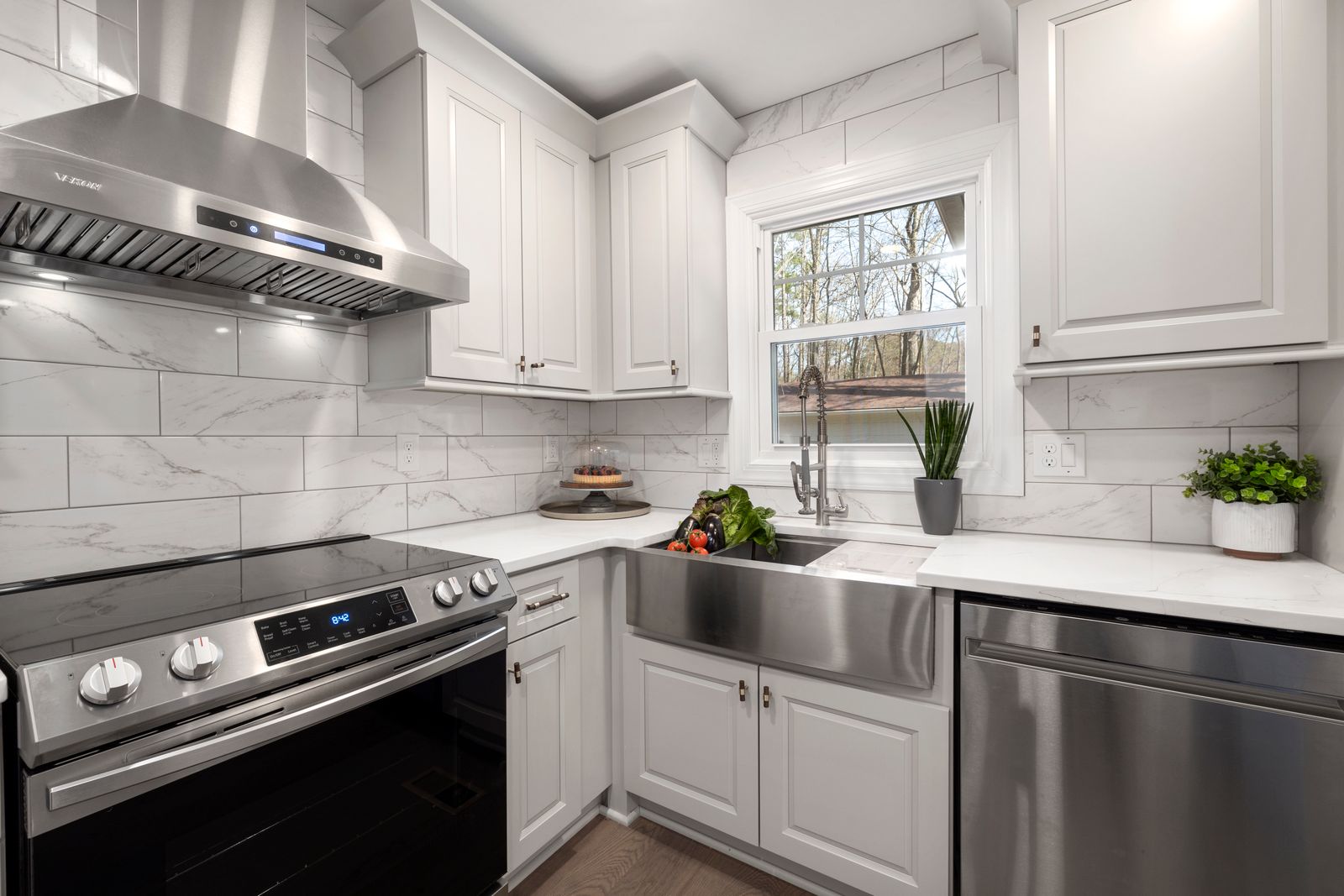
The viking range repair or replace decision depends on the specific part that failed and the age of the range, not on a rule of thumb — and because Viking ranges are heavy-duty and American-made, repair wins more often than not.
A Viking range pairs a cooktop with an oven, and the two halves diagnose differently: the gas burners are mechanical and symptom-led (no burner code table exists), while an electric or dual-fuel oven cavity reports the same EOC F-codes as the wall ovens — F1/F2/F3 on older boards, F01-F08 on the EOC4. We start with the everyday causes you can check yourself, then explain the signs that point to a part that genuinely needs a hands-on repair.
What a viking range repair or replace usually means
A spark electrode, bake igniter, RTD sensor, or burner cap on an otherwise healthy Viking is a clear repair: the rest of the range has plenty of life left. The calculus only shifts toward replacement when a major component such as the oven control board fails on a much older unit, or when several faults stack up at once. A confident diagnosis is what tells the two apart.
First checks you can do
Start with the checks you can safely do yourself. Each one rules out a common, inexpensive cause, and together they resolve the majority of cases without a service visit:
- Lean toward repair: a single common part (electrode, igniter, RTD sensor, burner cap) on a range only a few years old.
- Lean toward repair: the range otherwise cooks and bakes well with no other faults.
- Lean toward replace: a major component (oven control board, latch assembly) on a much older range.
- Lean toward replace: several faults appearing close together, suggesting general wear.
Take these in order and test whether the problem has cleared before moving to the next. If you do end up needing help, having worked through them gives the technician a useful head start.
Getting it right for the long run
One more factor deserves weight: the value of a confident diagnosis before you decide. Many appliances written off as dead turn out to need only a common, inexpensive part, while some that look like an easy fix hide a costlier underlying fault. An honest assessment of what actually failed, and what it would take to put right with genuine Viking parts, gives you a far better basis for the decision than the symptom alone. It is worth getting that read before you commit either way. There are also non-financial factors that tip the balance. Viking ranges are American-made and built to a heavy-duty standard, so a unit that has otherwise served well often justifies a repair on durability grounds alone, and keeping a sound appliance out of landfill has its own value. Against that, weigh the age of the unit, whether replacement parts are still readily available, and whether a newer model would bring features you actually want. The point of this guide is not to push you one way or the other, but to give you a clear, honest framework so the decision fits your situation rather than a generic rule — and a proper diagnosis is the piece of information that makes that framework work.
Putting it together
Work the checks above in the order given. Most Viking range faults of this kind clear at one of the early, owner-checkable steps; the ones that do not point to a specific part and are worth a proper diagnosis rather than guesswork. Move from the simplest cause outward, confirm each step before the next, and treat a returning code or a lingering symptom as your cue to bring in help. A little routine care afterwards prevents most repeat calls, since Viking builds these ranges to a heavy-duty, professional-grade standard.
Related reading: Viking range repair cost, Viking oven error code archive, and our range repair service.
Book Viking range service
If these steps do not resolve it, our experienced technicians repair Viking ranges with genuine parts and a 30-day labour guarantee. Schedule a visit, see what our range repair service covers, or confirm your model details on the manufacturer’s site at vikingrange.com.